
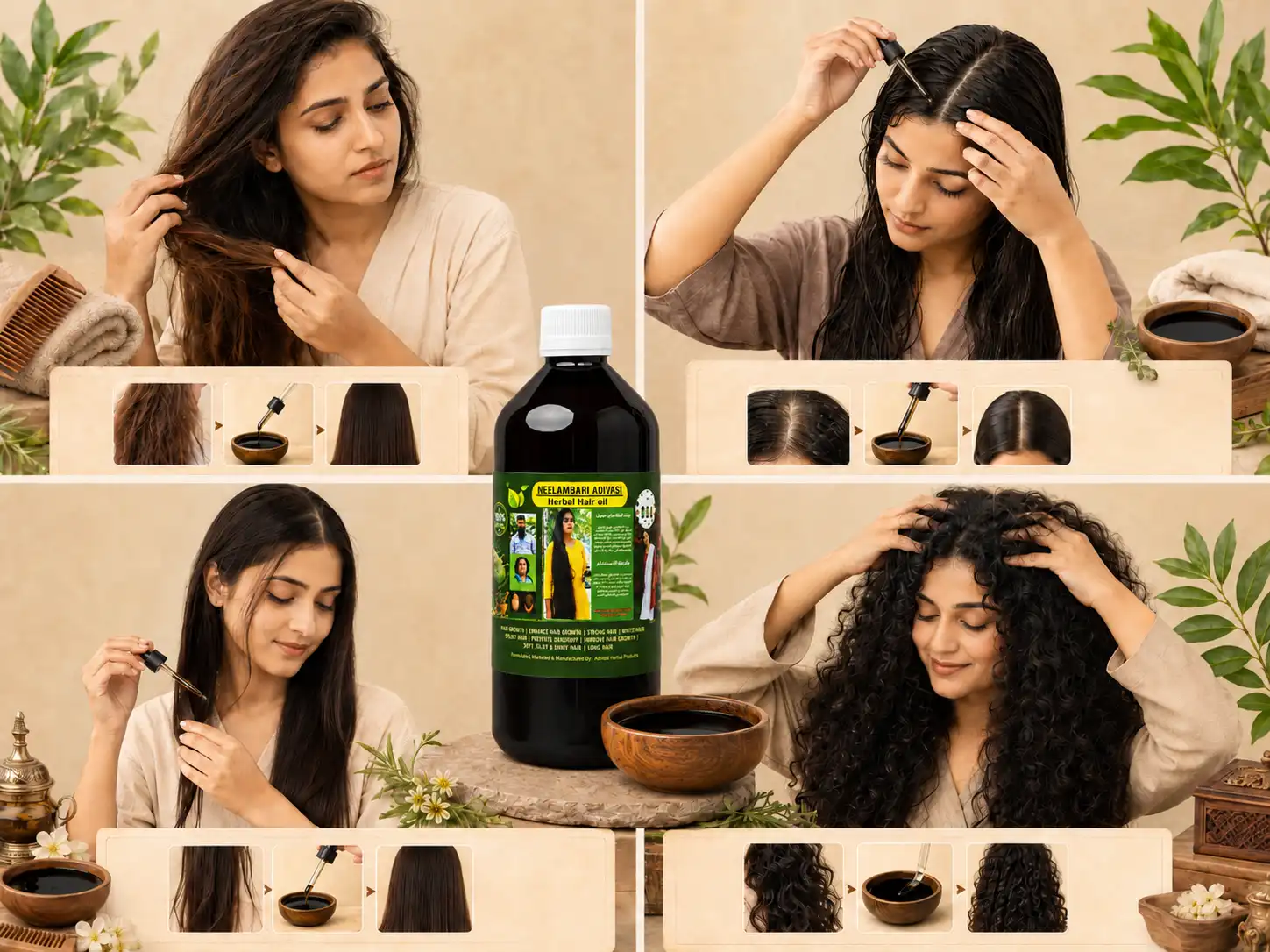
Usage of Tribal hair oil It doesn't have to be the same way for all people, because hair is different for everyone. Dry hair is not the same as oily hair, light hair does not tolerate what thick hair tolerates, and curly hair may need a different routine than fine hair.
And that's why a very important question arises: What is the schedule for using tribal hair oil by hair type?
And the short answer is: The best schedule for using tribal hair oil depends on your hair type and its basic need.
Dry hair may need clearer use on the ends, while oily hair needs a lighter amount and application away from the roots, light hair needs more care, and thick hair may tolerate a wider routine provided that no exaggeration.
Why should the schedule of use differ depending on the type of hair?
Because each hair type handles oils in a different way.
Dry hair;
It often needs hydration and calming of the ends more than others.
Oily hair
It may be quickly affected by oils, especially at the roots.
Light hair
It may quickly overburden even with a small amount if not used properly.
Thick hair;
It may need better distribution and a thoughtful amount to reach the ends.
Mixed hair
The roots may be oily while the ends are dry, and here the two zones should be separated.Therefore, using the same amount and the same timing for all hair types may give very different results, and may make some think that the oil does not suit them, while the problem is only in the schedule.
Table of use of tribal hair oil for dry hair
Dry hair is often one of the types that needs regular care, especially if the ends:
Rough
Split appearance
Fast interlocking
Many hishans
Difficult styling
The appropriate way
Tribal hair oil is preferably used on:
ends
The middle of the hair down
The driest areas
The right timing
Dry hair may suit the use of oil:
Pre-washing as a care routine
Or after washing with a very light amount only on the ends
Suggested number of times
It can be started with:
Once to twice a week before washing
Then evaluate the result by the response of the hair.
What are you watching?
Watch:
Have the ends become calmer?
Is the hashish less?
Is styling easier?
Did the hair stay comfortable without heaviness?
Important advice
Dry hair may benefit from regularity, but it does not mean using a large amount. It is always better to start with a balanced amount and increase it only if the hair needs it.
Table of use of tribal hair oil for oily hair
Oily hair needs smarter handling, because the roots may secrete natural oils quickly, and you may not be comfortable applying oil directly to them.
The appropriate way
The best is often:
Not to apply oil to the roots
Focus on the ends only
Use a very light amount
Avoid daily use
The right timing
The best option for often oily hair is:
Use oil before washing
Because this gives the hair a chance to benefit without the oil remaining on the roots or causing heaviness during the day.
Suggested number of times
It can be started with:
Once a week
Then increase or decrease the use depending on the result.
What are you watching?
Watch:
Did the roots stay comfortable?
Did the ends benefit?
Did the hair not weigh down?
Has styling become easier?
Important advice
If your hair is oily on top and dry on the bottom, don't judge the oiliness only by the undercoat. It may be suitable for the tips, but not suitable for the roots.
Table of use of tribal hair oil for light hair
Light hair needs more caution, because any excess amount may quickly appear on it and make it look:
Less intense
Flat out
Overloaded
Lost vitality
The appropriate way
Tribal hair oil tribal hair oil for light hair is preferably used in this way:
Very little quantity
On the periphery only
Away from the roots
Preferably before washing if the hair quickly thickens
The right timing
The best at the beginning:
Before washing
And not after him, unless the amount is very light and only on the ends.
Suggested number of times
Start with:
Once a week
Then watch whether the hair is relaxed or overloaded.
What are you watching?
Watch:
Did the hair keep its lightness?
Have the ends become calmer?
Has the overall shape not become flat?
Is styling easier without heaviness?
Important advice
Light hair does not need a clear amount to show the difference. Sometimes the least amount is the best result.
Table of use of tribal hair oil for thick hair
Thick hair may tolerate oils more than light hair, but it needs a good distribution so that care reaches the areas in need.
The appropriate way
The focus can be on:
ends
Middle of the hair
Dry or very frizzy areas
The right timing
Thick hair may suit:
Use before washing
Or a light touch after washing on the ends if the hair is too dry
Suggested number of times
It can be started with:
Once to twice a week
Depending on the degree of dryness and brittleness.
What are you watching?
Watch:
Are the strands getting quieter?
Is there less entanglement?
Is styling easier?
Has the oil reached the ends sufficiently?
Did the hair stay comfortable without excessive heaviness?
Important advice
Thick hair may need a quieter and longer distribution, but not necessarily a very large amount. It is important that the oil reaches only the areas in need.
Table of use of tribal hair oil for curly or wavy hair
Curly or wavy hair often suffers from:
Dryness of the ends
Heishan
Tangle
Difficulty in arranging strands
The appropriate way
It is preferable to focus on:
ends
Dry strands
Areas that quickly lose their shape
The right timing
It may suit him:
Before washing for deep care
Or after washing with a very light amount to reduce the fluff, if the hair tolerates it
Suggested number of times
Start with:
Once or twice a week
While observing the shape of the strands and the convenience of the hair.
What are you watching?
Watch:
Are the strands getting quieter?
Is the fluff less?
Is styling easier?
Did the hair keep its shape better?
Important advice
Do not overdo it with the amount so that the strands do not lose their natural mobility.
Table of use of tribal hair oil for mixed hair
Mixed hair is one of the types that most need accuracy, because it may be:
Fatty at the roots
Dry at the ends
The appropriate way
The best way is often:
Avoid roots
Focus on the ends only
Use a light to medium amount depending on the dryness
Use before washing at first
The right timing
The best:
Before washing
Especially if the roots secrete oils quickly.
Suggested number of times
Start with:
Once a week
Then increase according to the need of the ends, and not according to the condition of the roots.
What are you watching?
Watch:
Have the ends improved?
Have the roots remained light?
Did the hair not weigh down?
Has styling become easier?
Important advice
Do not treat mixed hair as one type. The roots have a need, the ends have a completely different need.
Table of use of tribal hair oil for dyed or treated hair
Dyed or heat-affected hair may look:
Drier and drier
More rough
More amenable to hashing
Weaker ends
The appropriate way
It is preferable to focus on:
ends
Tired areas
The driest parts
The right timing
Use before washing may be a convenient option at first, while monitoring the response of the hair.
Suggested number of times
It can be started with:
Once a week
Then evaluate the softness and comfort.
What are you watching?
Watch:
Are the ends quieter?
Is there less apparent dehydration?
Is styling nicer?
Did the hair stay comfortable?
Important advice
If the hair is dyed or treated, you should avoid overdoing with any product, calmly monitor the hair's response.
How to choose the most suitable table for you?
Choose the schedule based not only on the name, but also on what is actually happening to your hair.
Ask yourself:
Does my hair weigh down quickly?
Is the problem in the ends or the roots?
Do I need to use before washing only?
Do I need a smaller amount?
Is the result shown at the ends?
Has styling become easier?
If your answers indicate heaviness, dilute the amount and frequency.
And if they indicate dryness of the ends, focus more on the ends.
If the result is mixed, adjust the schedule instead of turning off the oil directly.
Can the same table be used all the time?
Not always.
The need for hair may change depending on:
Season
Humidity
Number of washings
Use of heat
The dye
Hair length
Status of the ends
Example
In winter or with dryness, the ends may need clearer use.
And in summer or with humidity, you may need a lighter amount or times less.
The best rule
Make the schedule flexible, but don't make it random.
When to reduce the number of use?
Reduce the number of times you use tribal hair oil if you notice:
Frequent heaviness
Hair loss for lightness
Discomfort in the scalp
Clear accumulation
Difficulty in styling
Or the hair has become less comfortable
Here it does not mean that the oil is not necessarily suitable, it may just mean that the frequency is more than your hair needs.
When to increase the frequency of use?
A little increased use can be considered if you notice:
The ends are still dry
Hair responds without heaviness
The fragility is still evident
Styling needs more support
The result is good, but it needs more regularity
But the increase should be gradual, and not abruptly.
Where does the role of Adivasi Herbal come from here?
Some people prefer to have Tribal hair oil Within a clear routine instead of using it randomly. And for this it can be an oil Adivasi Herbal A suitable option for anyone who wants a structured herbal experience, especially when used in a way that suits the type of hair and its real need.The most important thing is to treat the oil as part of a balanced routine, not as a single step used in the same way for all hair types.
Common mistakes when determining the schedule of use
1. Use the same table for all hair types
This leads to inaccurate results.
2. Applying oil to the roots despite the greasy scalp
It may cause unwanted heaviness.
3. Use a large amount for light hair
This makes the hair look flat.
4. Reduced use despite severe limb dryness
Sometimes dry hair needs more regularity.
5. The schedule should not be adjusted as the hair condition changes
Hair is changing, and the routine should calmly change with him.
Conclusion
The schedule of use of tribal hair oil should be built on the type of hair and their real need.
Dry hair may need a clearer use on the ends, oily hair needs a lighter amount and avoid the roots, light hair needs extreme caution in quantity, while thick or curly hair may benefit from a more regular routine. And most importantly, keep an eye on the result: have the hair become calmer, softer, easier to style Or has he become overloaded and needs an adjustment
Frequently asked questions (FAQ)
How often do I use tribal hair oil?
It depends on the type of hair. Dry hair may suit it once to twice a week, while oily or light hair may start with only once a week.
Do I put tribal hair oil on the roots?
Not always. If the scalp is oily or the hair is light, it is better to focus on the tips or use it only before washing.
What is the best schedule for dry hair?
Often one to two times a week with a focus on dry ends and areas.
What is the best schedule for oily hair?
Once a week before washing, away from the roots, with a light amount.
Is light hair suitable for tribal hair oil?
It may suit him if used in a very small amount and only on the ends, preferably before washing at first.
Can the schedule of Use be changed?
Yes, it is even preferable to adjust it depending on the response of the hair, the season and the condition of the ends.
Conclusion
Usage of Tribal hair oil Correctly it does not depend on the number of repetitions** correctly it does not depend on a fixed number of times that suits everyone, but on understanding your hair type and determining its real need.
Start with a simple table, watch the result, calmly adjust when needed. And in the end, the best schedule is the one that makes your hair More comfortable, softer and easier to style Without heaviness or exaggeration.