
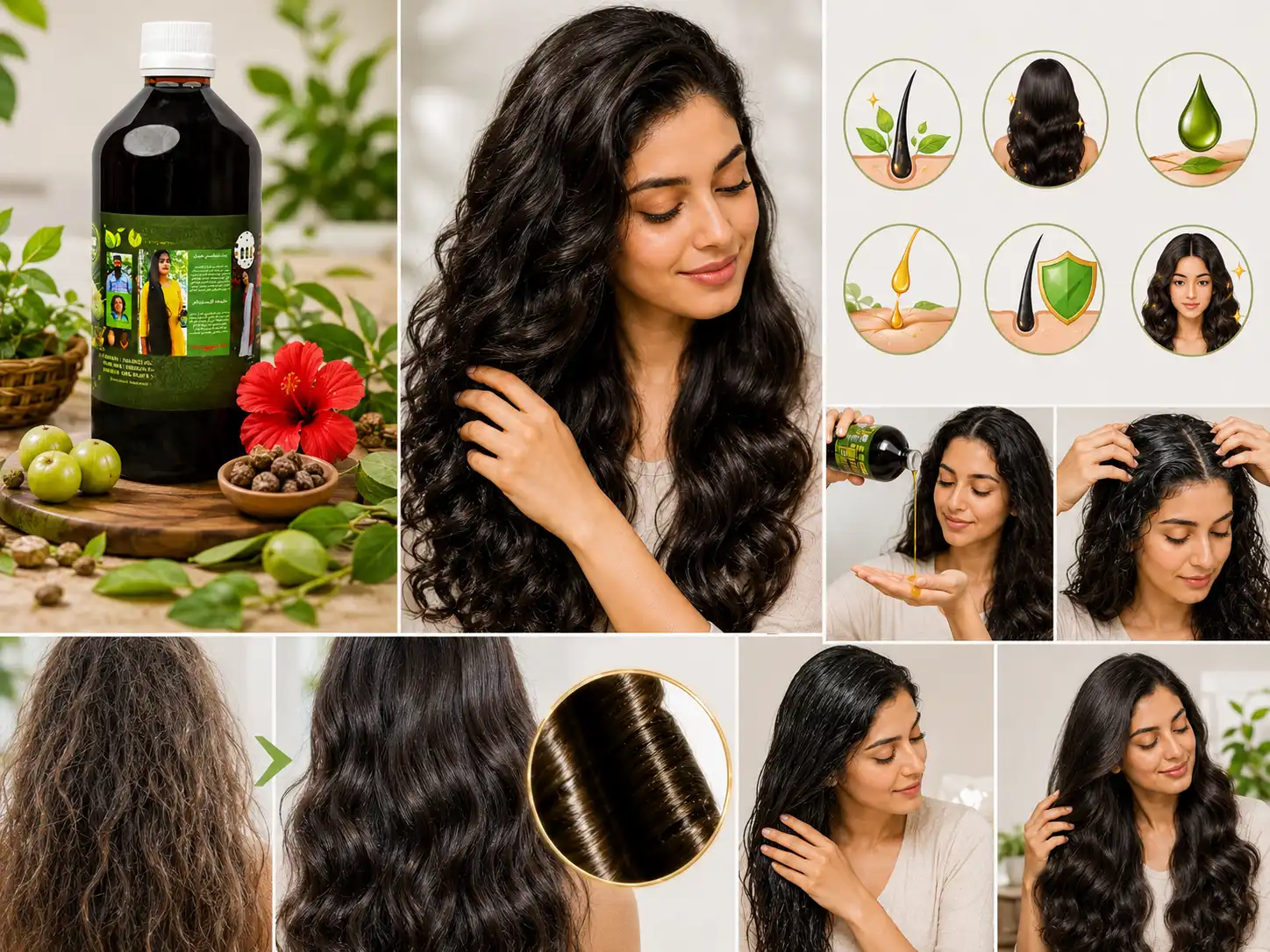
Damaged hair is one of the problems that makes daily care the most difficult, because the hair becomes less smooth, more prone to dryness, faster to tangle and split.
That is why the question is repeated: Does tribal hair oil really benefit damaged hair?And the short answer is: Yes, tribal hair oil may help damaged hair within a balanced care routine،
But it's not a panacea that fixes all the damage from one step. Damaged hair often needs Gentler care, reduce the causes of stress, and regularize on appropriate steps.
And here the oil can be an important part of the routine because it helps to soothe the texture, reduce the appearance of dryness and gradually support softness.
What is meant by damaged hair?
Damaged hair is hair that has lost part of its natural comfort and elasticity, and has become:
Clearly dry
Rough texture
Split ends
Fast interlocking
Dull or fatigued figure
Less responsive to styling
And most often it happens due to factors such as:
High temperature
Tincture or harsh treatments
Improper washing
Violent rubbing
Frequent stretching
Negligence of the ends
Persistent dryness
Does tribal hair oil benefit damaged hair?
In many cases, yes.
But the benefit here is often in Improve the appearance and feel of damaged hair More than it completely restores very damaged hair to its original state. When used correctly, the oil may help to:
Support hair smoothness
Reduce the sensation of dryness
Soothe the appearance of roughness
Make ends more comfortable
Reduce the appearance of brittleness
Facilitate styling
Therefore, tribal hair oil can be seen as a supportive and beneficial step for damaged hair, especially if it is part of a gentler care routine.
How can tribal hair oil help damaged hair?
There are several aspects that make the oil suitable for this type of hair:
1. Softer texture support
Damaged hair often looks rough and tired, and oil may help make it more comfortable to the touch.
2. Reduce the appearance of dryness
Dryness is one of the clearest signs of damage, and when the hair gets proper care, it may look less dull and calmer.
3. Soothe tired ends
The ends are often the first part to show damage, and using oil on them may make them look better and reduce the feeling of roughness.
4. Improved styling experience
When the hair is less tangled and softer, it becomes easier to care for it, and this is very important with damaged hair.
Does tribal hair oil completely repair damage?
It is important here that the expectations are realistic.
Oil may help to improve the appearance of damaged hair and support their care, but it alone does not completely fix all types of deep damage. If the hair is very damaged due to heat, dyes or advanced split ends, it often needs more than one step, such as:
A nicer routine
Reduce the causes of damage
Limb care
Cut the most damaged part when needed
Not to overheat
Therefore, oil is useful, but it is often Part of the solution Not the only solution.
When is tribal hair oil more useful for damaged hair?
It is usually more useful when the hair:
Clearly dry
Rough texture
Fast frizz
Split ends of the ends
Tired of washing or heat
Need a clear weekly routine
In these cases, the oil may help to make the hair more comfortable and softer with time.
What is the best way to use tribal hair oil for damaged hair?
If your hair is damaged, then most often these methods are the most convenient:
Before washing
And this is one of the most comfortable and successful ways.
The right amount of oil can be applied to the hair or ends before washing, especially if the goal is to reduce dryness and prepare the hair for care.
On the periphery
If the damage is concentrated at the ends, it is often better to focus on them instead of applying a large amount to the entire hair.
Within a consistent weekly routine
Damaged hair benefits the most from Continuation Not from intermittent use. Therefore, the introduction of oil within a clear Weekly care Day is often an excellent option.
Is the oil applied to the scalp or only to damaged hair?
This depends on the nature of the problem.
If the damage is more concentrated in:
ends
Middle of the hair
General texture
The focus is often on the length of the hair and the ends are more important than the roots.
But if you also want a scalp care step as part of the routine, some people can gently apply oil to it before washing, but provided that the step does not turn into an excessive amount or a heavy routine.
Is it suitable for all types of damaged hair?
Yes, it may suit different types, but with different method:
Dry damaged hair
This is one of the types that may benefit the most from the oil, especially if the goal is to soothe dryness and roughness.
Oily damaged hair
It may also suit him, but in a lighter amount and with a greater emphasis on the ends rather than the roots.
Light damaged hair
It can fit him, but in a very small amount so that the hair does not look overloaded.
Damaged curly hair
Often he clearly benefits, especially if he suffers from brittleness, dryness, difficulty styling.
What mistakes make damaged hair not benefit from oil?
There are common mistakes that make a person feel that the oil has not done him any good, such as:
1. Use a very large amount
Damaged hair needs balanced care, no overload.
2. Continue in high heat
Oil will not give the best result if the hair continues to be daily exposed to factors that increase damage.
3. Ignoring the ends
The ends are often the first place that needs care in damaged hair.
4. Expect a complete result from the first time
The best improvement is usually gradual.
5. Dependence on oil alone
If the whole routine is harsh, then oil alone will not be enough.
What does damaged hair need besides oil?
So that the oil works better, it helps to have it as part of a routine that includes:
Washing hair gently
Use a suitable balm when needed
Reduce high heat
Drying hair quietly
Not rubbing it violently
Limb care
Reduce harsh styling
These things make the oil work inside A better environment for hair Instead of working alone against a stressful routine.
Does oil help reduce the appearance of frizz in damaged hair?
In many cases yes, because often damaged hair is more prone to brittle. When used properly, the oil may help to:
Calming the appearance of volatilization
Softness support
Make hair more tidy
Improve hair sensation after washing or styling
How to build a simple routine for damaged hair using tribal hair oil?
The practical routine can be as follows:
A fixed weekly Care Day
Use oil before washing
Focus on the most tired ends or areas
Washing hair in a gentle way
Use a balm if the hair needs
Reduce heat after washing
Not pulling or combing hair violently
That's why some people prefer herbal options that easily fit into their tired hair care routine, such as Adivasi Herbal, Especially when a natural and calm step is desired that supports softness and relieves the appearance of dryness and fatigue.
When oil alone is not enough for damaged hair?
If the damaged hair suffers from:
Very intense pounding
Strong damage from dye or heat
Constant cracking
Severe dehydration does not improve
Obvious scalp problem
Unusual precipitation
Here, oil alone may not be enough, and the hair may need a wider routine or to reduce the factors that clearly increase damage.
Common mistakes
1. The belief that oil repairs all damage alone
Oil is useful, but it is not a substitute for a gentler routine and reducing the causes of spoilage.
2. Use a very large amount
The excess amount may make the hair heavier without real additional benefit.
3. Ignoring tired ends
Much of the hair damage is concentrated at the ends, so they should be an essential part of the care.
4. Persisting in extreme heat
This is one of the habits that most impairs any good result from the oil.
5. Stop quickly
Damaged hair needs patience and regularity so that the improvement appears more clearly.
Conclusion
Tribal hair oil may benefit damaged hair By supporting smoothness, reducing the appearance of dryness and roughness, improving the texture of the ends, and making styling gentler. But it is usually not a complete solution alone if the damage is strong or the daily routine constantly strains the hair. Therefore, the best result comes from Using oil within a calm and balanced routine It takes into account the type of hair and reduces the factors that increase damage.
Frequently asked questions (FAQ)
Is tribal hair oil suitable for damaged hair?
Yes, it can be very convenient when used in a balanced way within a gentle care routine.
Does it fully repair the damage?
No, but it may help to gradually improve the appearance and texture and support the care of damaged hair.
Where to put oil if my hair is damaged?
Often on the ends or on the hair before washing, especially if the damage is concentrated in dryness, roughness and brittleness.
Is it suitable for dyed damaged hair?
Yes, it may also suit him, especially if the goal is to reduce the appearance of dryness and improve the texture of the hair.
Is oil alone enough for damaged hair?
Not always, because damaged hair also needs to reduce heat, harsh washing and care for the ends.
When will the result appear?
An initial note may appear in softness and texture, while the clearest improvement needs continuation and a constant routine.
Conclusion
Damaged hair does not need big promises, but rather Sincere, calm and constant care. When it is used Tribal hair oil Properly shaped, it may well be a beautiful step that helps to make the hair softer, calmer and more comfortable in texture.
But the best result always comes when the oil is part of A gentler routine that respects the condition of the hair and gives it what it really needs without exaggeration.