
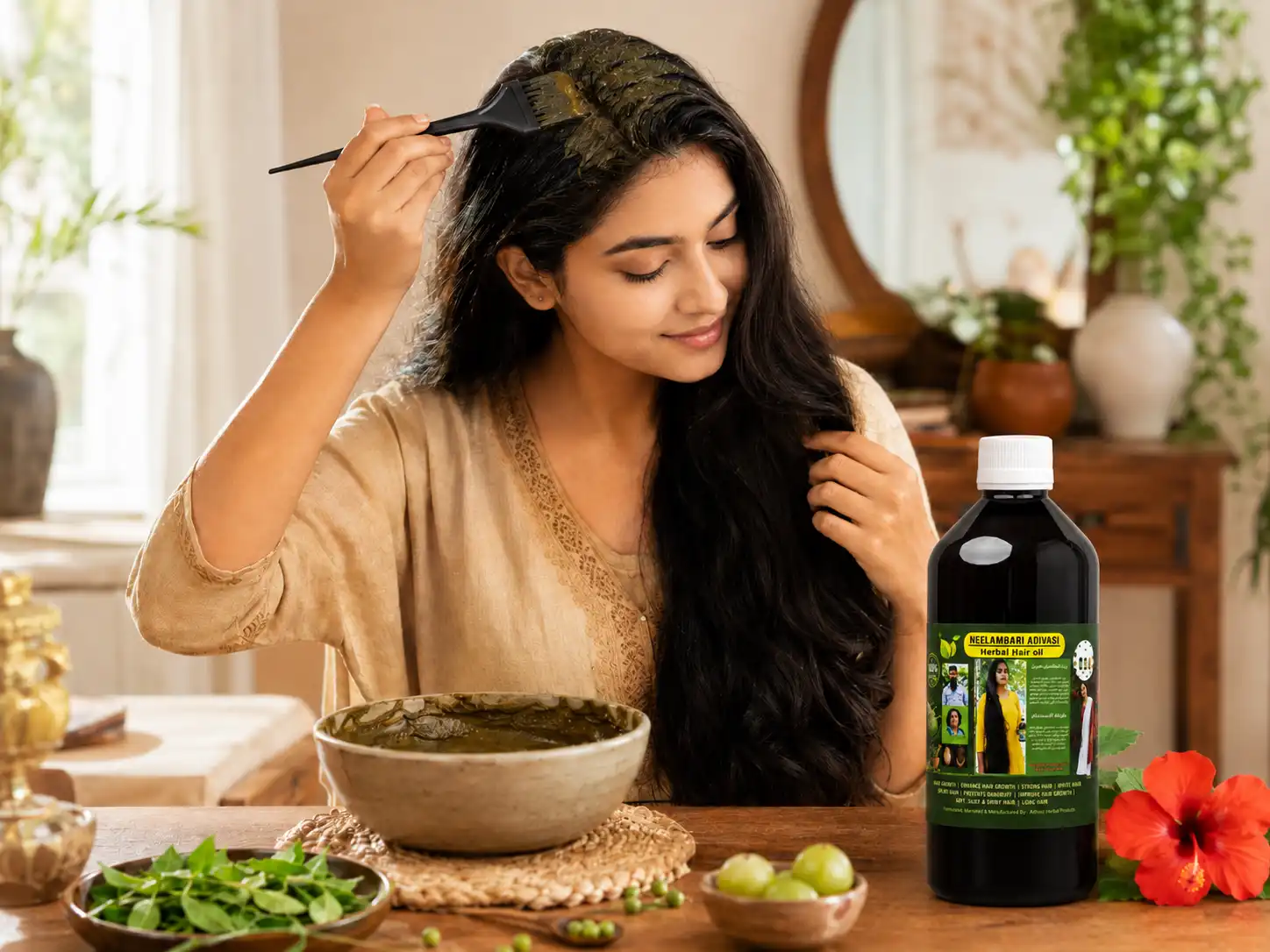
Henna is one of the steps that many women resort to the most to take care of hair, change its appearance or give it a different natural touch.
But after henna or while thinking about its use, a very important question arises: Can tribal hair oil be used with henna? Are these two steps really complementary, or is it better to separate them?
And the short answer is: Yes, tribal hair oil can be used with henna, but provided that the timing is right and each step has a clear role within the routine. Henna has its time and method, while oil often comes as a care and calming step, especially after henna or in the general hair routine, and not necessarily as a very direct step at the same time as the timing of application.
What is the difference between the role of henna and the role of tribal hair oil?
To understand the method of coordination between them, it is important to know that Henna and oil are not the same thing.Henna is often used for:
Giving hair a different look
Renew the sensation of hair
Adding a well-known step into the traditional care routine
Giving hair a natural character in appearance for some people
As for tribal hair oil, it is often used for:
Calm the ends
Reduce the sensation of dryness
Softness support
Reduce fragility
Include it in the pre-wash routine or after it in a light amount
Therefore, henna is A special and specific step within the routine, While the oil is A continuous and calm care step.
Can tribal hair oil really be used with henna?
In many cases, yes.
Especially if the goal is:
Soothing hair after henna
Reduce the sensation of dryness
Support the smoothness of the ends
Reduce fragility
Build a gentler hair routine after this step
Keep the hair comfortable and not leave it tired
But here it is important to understand that the question is not only: Can they be used together?
It is also: When and how?
When is it useful to use tribal hair oil with henna?
This combination may be most useful when the hair is:
Naturally dry
Fast frizz
Tired ends
Too long
Corrugated or curly
He needs to calm down after some care steps
He needs a practical routine after henna
In these cases, tribal hair oil may be a nice step to support the comfort of the hair, especially at the ends or within the pre-wash routine after the henna phase itself is over.
Does tribal hair oil sing about henna?
No.no.
Because henna is a completely different step in the goal and method of use, while oil is a step of care and support for softness and comfort. Therefore, each of them performs a different function within the routine.
Does henna sing about tribal hair oil?
Not always either.
Even with the use of henna, the hair may still need:
Calm down in the ends
Reduce dehydration
Softness support
A light step against frizz
Gentle care between washes
And here tribal hair oil may be a complementary step, and not something that henna automatically cancels out.
Can tribal hair oil be applied just before henna?
In most cases، This is not the best timing If henna will be used directly.
Because henna time usually needs clear hair, free from heavy layers or obvious accumulations. Therefore, the best is often the oil step:
At a time different from the time of henna
Or before a while in a separate routine
Or after henna when the calming and caring routine begins
In other words، It is better not to treat the oil as a very direct step before applying henna.
Can tribal hair oil be used after henna?
Yes, and in many cases this is the most reasonable and comfortable time.
After henna, the hair may need:
Calm down
Kinder Care
Reduce the sensation of dryness
Party support
Reduce fragility
Restore some softness in texture
And here tribal hair oil may be a very suitable step if used:
In a balanced amount
At the right time
And on the areas that really need it, especially the ends
What is the best time to use tribal hair oil with henna?
There is more than one practical and convenient way:
1. The use of oil in the weekly routine after henna
And this is one of the most comfortable ways.
The hair is first left to go through the henna phase and proper washing, and then the oil enters into the subsequent care routine.
2. Use it before washing on the ends
This is one of the best ways for hair that feels dry, rough or frizzy after henna.
3. Use a very light touch on the ends after washing
Some people prefer a very light touch if the ends need to be calmed down, but it is important that the amount is kept very small.
Do I apply tribal hair oil on the scalp or only on the hair after henna?
It depends on the need of your hair.
But in many cases, the best concentration after henna is on:
ends
Hair length
The driest areas
Areas where brittleness or roughness appears
As for the scalp, it may not be the part that needs the most oil after henna, unless you have a specific routine that suits it and the scalp accepts it comfortably.
Is it suitable for all types of hair with henna?
It may suit many types, but the method of use varies depending on the type of hair.
Dry hair;
This is one of the types that may benefit the most from oil with henna, because dryness may be clearer after this step.
Oily hair
It can also fit him, but in a lighter amount, and often only on the ends.
Light hair
It needs greater accuracy:
Very small quantity
Focus on the ends only
And not to overdo it so that the hair does not look overloaded
Curly or wavy hair
Often it may clearly benefit, because this type of hair may combine dryness, brittleness and difficulty styling.
Long hair;
This is one of the types that may benefit the most, because long hair often needs a pronounced smoothing at the ends after steps such as henna.
Is it suitable for hair that constantly uses henna?
Yes, provided that the oil is part of A balanced routine No needlessly repetitive heavy step. Hair that enters henna into its routine from time to time may also need:
Calm down for the ends
Reduce roughness
Softness support
Reduce fragility
And here tribal hair oil may be a suitable step if used intelligently.
What are the common mistakes when using oil with henna?
There are mistakes that make the routine less comfortable, such as:
1. The use of oil immediately before henna is clearly a plus
And this may not be the best timing.
2. Use a large amount after henna
Even hair that needs care does not always need a clear layer of oil.
3. Applying oil to the roots unnecessarily
In many cases it is the ends that need the most care.
4. Dependence on oil alone
Hair that includes henna as part of its routine needs gentle general care, not just oil.
5. Ignoring the type of hair
What suits long dry hair does not suit light or oily hair in the same way.
How to know that tribal hair oil is suitable for your hair with henna?
You can notice this by some signs:
Have the ends become softer?
Has the dryness eased?
Do you say the frizz?
Has styling become easier?
Did the hair look comfortable and not burdened?
Is the routine itself easy and clear?
If these indicators are positive, then most likely the use of tribal hair oil with henna is suitable for you in this way.
How to build a simple hair routine with henna using tribal hair oil?
The practical routine can be as follows:
Not using oil as a very obvious step immediately before henna
Use it afterwards within the aftercare routine
Focus on the drier ends or areas
Use it before washing once or twice a week as needed
Apply a very light touch to the ends only when needed
Reduce heat and tensile
Monitor the hair response and quietly adjust the routine
And here some people prefer calm herbal routines that give hair balanced care, such as Adivasi Herbal, Especially when wanting to build a work routine that supports softness and reduces dryness and brittleness without complication.
When is such a merger not necessary?
Such a merger may not be necessary if:
Hair is originally balanced after henna
The current routine is enough
Hair quickly thickens
Or if you notice that the oil does not add a real difference at this stage
In this case, the best is Simplifying the routine Allowance for increasing steps.
Common mistakes
1. The belief that tribal hair oil should be used directly with henna time
It is often better to have it within the aftercare routine or before washing at a separate time.
2. The use of a large amount of oil after henna
This may make the hair heavier than necessary.
3. Applying oil to the roots unnecessarily
Especially if the primary problem is in the ends or the length of the hair.
4. Ignoring the type of hair
Dry hair is different from light, and long hair is different from oily, and therefore the method should be different.
5. The complexity of the routine
The clearer the role of each step, the better and more comfortable the result will be.
Conclusion
Yes, tribal hair oil can be used with henna, And this format may be very useful for some types of hair, especially if the hair is dry, brittle or tired ends.
But success here depends on having every step Clear role, light quantity and convenient timing. Therefore, the best is always Smart and simple formatting It makes the hair softer and more comfortable, without heaviness and complexity.
Frequently asked questions (FAQ)
Can tribal hair oil be used with henna?
Yes, it is possible for many people if the use is balanced and the timing is right.
Do I apply tribal hair oil just before henna?
In most cases, this is not the best timing, and it is often better to use it at a separate time within the care routine.
Can it be used after henna?
Yes, and often this is the most reasonable and comfortable time, especially for caring for ends and reducing dryness.
Is it suitable for dry hair with henna?
Yes, and it can be very useful for this type of hair if used in the right amount and on the driest areas.
Is it suitable for light hair?
It can, but in a very small amount and often only on the ends.
Is oil alone enough for hair with henna?
Not always, because the hair also needs a gentle routine, heat reduction and general hair care.
Conclusion
Hair that includes henna in its routine needs Calmer, smarter care- No to too many steps. When it is used Tribal hair oil In the right way, it may be a beautiful step that will help make the hair softer, calmer and more comfortable after henna.
And in the end, the best routine is not the one that contains the most products, but rather Who gives the hair what it really needs in the simplest possible way.