
Introduction
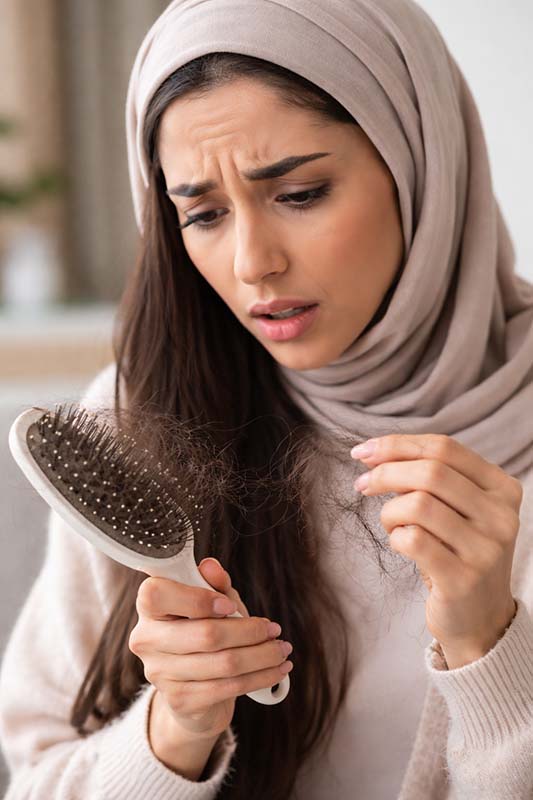
Many people go through a period of stress, anxiety or lack of sleep, and after about a month they notice more hair loss and start worrying: "is stress the cause of the loss?"”.
In many cases, yes — stress can be an important cause of falling out Especially if the flaking is spread all over the head.
In this article, we explain the signs of stress loss, when it usually appears, and how to reduce it with a 30-day plan that combines a scalp care routine and simple calming steps.
Does stress actually cause hair loss?
Stress may contribute to increased hair loss in some people because it affects the balance of the body and the hair growth cycle.
The important thing is that you know that stress-related falls are often:
- It appears after a period of stress (not the same day)
- Be diffuse
- It gradually improves when sleep and routine improve
When does hair loss begin after stress?
Most often it appears after 4 to 8 weeks From a strong stressful period (shocks, severe anxiety, prolonged lack of sleep, constant problems).
That's why many people don't associate the cause with stress because it's late.
Signs of hair loss due to stress
- Diffuse alopecia all over the head (not a specific spot)
- A pronounced increase during shower or combing
- There is no clear circular void like alopecia
- Coincided with a period of stress/bad sleep/anxiety
- The scalp may be normal or sometimes slightly itchy due to tension
If there are obvious circular voids or severe inflammation, it may be another cause and a medical evaluation is advisable.
How to tell the difference between stress loss and nutritional deficiencies?
- Stress loss: associated with stress and sleep, and appears weeks later
- Nutritional deficiencies: may come with fatigue/pallor/dizziness/weak toenails
Sometimes the two causes come together, so if the shedding is strong or prolonged, iron and vitamin D tests are useful.
A 30-day plan to reduce stress shedding (practical)
Week 1: soothe the scalp and stop the etiology
- Lukewarm water instead of hot
- Gentle combing with a wide comb
- Heat reduction (consulting / Vir)
- Avoid pulling hair too hard
- The goal of sleep: to improve it as much as possible (even if an extra half hour)
Week 2: fixed routine + simple body support
- Daily protein (eggs/chicken/legumes)
- Drink enough water
- 10 minutes walking / relaxing daily (to relieve stress)
Week 3: stabilization of results and reduction of breakage
- Balm for ends after washing
- Drying “compress " without rubbing
- Avoid violent combing while wet
Week 4: realistic assessment
- Compare the amount of precipitation now with the beginning of the month
- If you start saying: keep going
- If you don't say definitively: think about tests or a scalp assessment
Adivasi oil routine (stress reliever)
The goal here: scalp support + relaxing massage.
How to Use
- Hair splitting
- Applying oil to the scalp
- Massage 3-5 minutes (Quiet without strong rubbing)
- Duration of leaving by type of scalp:
- Greasy: 60-90 minutes
- Normal/dry: 2-3 hours
- Dandruff/itching: 45-90 minutes
- Washing with a gentle shampoo
Number of times per week:
- Greasy: 1-2
- Normal: 2
- Dry: 2-3
5 simple steps that reduce stress shedding (no complication)
- Sleep as consistently as possible
- Cut back on caffeine another day
- Deep breathing 3 minutes before bedtime
- Light walks daily
- Don't monitor hair every day — rate weekly
When to worry?
- Very severe precipitation more than 2-3 months
- The appearance of clear voids
- Symptoms of a lack of elements (fatigue, dizziness, pallor)
- Inflammation/severe itching
Here are the best check-ups or a dermatologist.
Frequently asked questions (FAQ)
Does hair return after stress loss?
It often gets better when the cause improves and the routine stabilizes, but it takes time and patience.
How long does it take to get better?
The difference is gradual within 4-8 weeks, and in many cases is pronounced within 3 months.
Does massage help?
Yes as an adjuvant because it relieves stress and gives support to the scalp.
Conclusion
If you are in a stressful period, do not blame yourself. Stress relief is common and often temporary, but it needs a plan: better sleep, gentle care, and a consistent 30-day routine. Start today and watch the difference week by week.
Order Adivasi Herbal oil now:www.adivasi-herbal.com