
Introduction
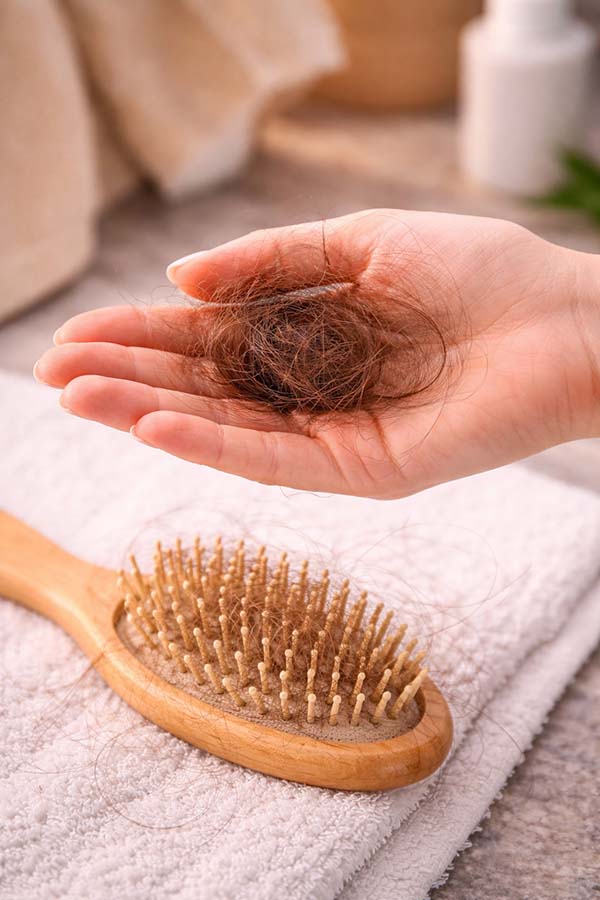
Many people worry when they see hair on the mattress or during the shower and think that they have a big problem. But the fact is that hair loss is a natural part of the hair life cycle.
The correct question is: How many hairs fall out per day naturally And when does the subject become abnormal and need intervention?
In this article we explain the normal range, give clear signs to differentiate between normal and alarming, with practical steps that help to gradually reduce flaking.
How many hairs fall out per day naturally?
In most cases, precipitation 50 to 100 hairs per day It is considered normal.
It may increase slightly depending on:
- Hair length (shows more because it is clear)
- Number of Combs
- Washing Day (loose hair collects and appears at once)
Therefore: seeing a larger amount on the day of the shower does not always mean that the precipitation actually increased.
Why do hair fall out at all?
Hair goes through a natural cycle:
- Growth phase
- Resting phase
- The stage of shedding and then new growth
Every day a part falls out and a new one begins to grow.
When is hair loss “abnormal?"
These are strong signs that you need to check the reason:
1) sudden excess precipitation
If you notice a significant increase in two weeks-a month for no apparent reason.
2) falling out with obvious voids or widening hair difference
Especially if the voids start to grow up quickly.
3) flaking with severe itching/inflammation/thick crusts
It may be a scalp problem (inflammation, severe dandruff, eczema, etc.).
4) hair became weaker and thinner in general
A pronounced thinning of the hair density.
5) continuous shedding more than 2-3 months without improvement
Here it is necessary to look for the cause (lack of elements/hormones/stress).
A simple test at home (hair pulling test)
- Hold a small strand (about 30-40 hairs)
- Pull gently
- If you get out 1-3 hairs Mostly natural
- If you get out More frequently May mean increased precipitation
The test helps but is not a definitive diagnosis.
Common causes of abnormal shedding
- Stress and lack of sleep
- Lack of iron (Ferritin), vitamin D or zinc
- Thyroid disorder
- After childbirth (often temporary)
- Severe dandruff/inflammation of the scalp
- Heat, dyes and brittleness (appears as precipitation)
- Genetic factor (in some men and women)
What to do to reduce flaking (Practical plan)
1) take care of the scalp first
If the scalp is inflamed or has a crust, scalp treatment reduces flaking.
2) reduce spoilage triggers
- Reduce heat
- Do not comb violently while wet
- Lukewarm water
3) food and sleep
Even the external routine needs internal support: protein + water + sleep.
Adivasi oil routine to reduce flaking (as an adjuvant)
- Hair splitting
- Applying oil to the scalp
- Massage 3-5 minutes
- Duration of leaving by type of scalp:
- Greasy: 60-90 minutes
- Normal/dry: 2-3 hours
- Dandruff/itching: 45-90 minutes
- Washing with a gentle shampoo
Number of times per week:
- Greasy: 1-2
- Normal: 2
- Dry: 2-3
- Crust: 1-2
When to do tests?
If the shedding is severe or persistent:
- Ferritin (iron stock)
- Vitamin D
- Gland examination (TSH) if you have symptoms
- Sometimes zinc depending on the case
Frequently asked questions (FAQ)
Why hair falls out more on the day of washing?
Because the hairs that would have fallen out daily gather and come out at once.
Does hair length increase hair loss?
It does not actually increase it, but it makes it “appear” more.
When can I see an improvement from the routine?
Gradual improvement within 3-4 weeks, a clearer difference within 6-8 weeks with adherence and treatment of the cause.
Conclusion
The loss of 50-100 hairs per day is often normal. But if it suddenly increases, voids appear, or it is accompanied by inflammation and itching, here you need a clear plan and examinations when needed. Start a suitable protein for the scalp, reduce the etiology and monitor the improvement.
Order Adivasi Herbal oil now:www.adivasi-herbal.com