
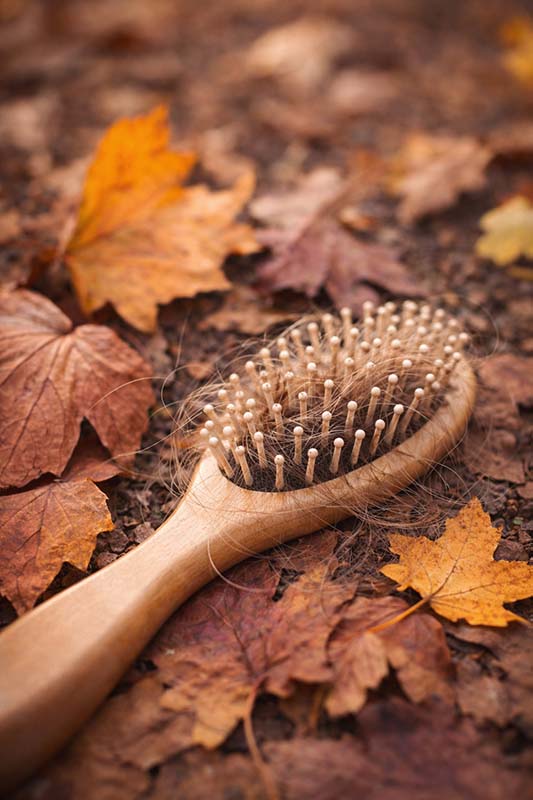
Introduction
Many people notice that hair loss suddenly increases in a period of the year, especially with a change of weather. This is often called Seasonal hair loss.
But the important question is: Is it normal And how long does it last And when is it a sign of a bigger problem such as a lack of elements or inflammation of the scalp?
In this article, we explain the picture in a practical way, and then we give you a 4-week plan that helps reduce flaking and support the scalp.
What is seasonal hair loss?
It is a temporary increase in hair loss over a short period due to seasonal/environmental changes that affect the hair cycle.
Usually it is:
- Diffuse flaking of the whole head
- Without obvious voids
- And gradually decreases with time
Many people notice it in seasonal transitions (such as the beginning of autumn or spring), but it may vary depending on the person and the environment.
How long does seasonal hair loss last?
Often it continues From 4 to 8 weeks Then he starts to get better.
If it lasts more than 2-3 months without improvement, here we need look for another reason.
Why does precipitation increase in some seasons?
Possible reasons:
- Changes in the natural hair growth cycle
- Psychological stress with a change in routine (return to school/work / travel)
- Lack of fluids/hydration due to the atmosphere
- Sweating more in the heat or dehydration in the cold
- Change of care (hot water, more heat, stronger shampoo)
How to distinguish seasonal precipitation from alarming precipitation?
Mostly "seasonal and normal" if:
✅ Precipitation is diffuse without obvious voids
✅ No pain/severe inflammation of the scalp
✅ It appeared suddenly and then begins to gradually subside within 4-8 weeks
✅ The rest of the hair looks natural
It may be "alarming" if:
⚠️ Clear voids or widening hair bands quickly
⚠️ Very severe precipitation lasting more than 2-3 months
⚠️ Strong itching/thick crusts/inflammation
⚠️ General symptoms: severe fatigue, dizziness, pallor (may indicate a lack of elements)
4-week plan to reduce seasonal precipitation
Week 1: soothe the scalp and reduce the etiology
- Lukewarm water
- Gentle combing (wide comb)
- Reduce heat
- Better sleep + drink more water
- A balm for ends to reduce breakage
Week 2: fixing the routine
- Regular oil sessions depending on the type of scalp (see below)
- Reduce hair pulling and strong ties
- Do not use heavy products on the scalp
Week 3: nutrition and rest support
- Daily protein
- Fruits/vegetables
- Reduce stress as much as possible
Week 4: realistic assessment
- Compare the amount of hair after the shower now with the beginning of the month
- Photos of the same place if you appreciate
- If there is a clear improvement: continue
- If there is no improvement: consider check-ups
Adivasi oil routine for seasonal shedding (as an assistant)
- Department of hair
- Apply oil to the scalp
- Massage 3-5 minutes
- Duration of leaving by type of scalp:
- Greasy: 60-90 minutes
- Normal/dry: 2-3 hours
- Dandruff/itching: 45-90 minutes
- Washing with a gentle shampoo
Number of times per week:
- Greasy: 1-2
- Normal: 2
- Dry: 2-3
When to do tests?
If the shedding is severe or lasts more than 2-3 months:
- Ferritin (iron stock)
- Vitamin D
- Gland (TSH) if you have symptoms
Frequently asked questions (FAQ)
Does seasonal shedding mean I'm bald?
Probably not. It is temporary and gradually subsides if it is seasonal.
Does the day of washing show more precipitation?
Yes, because the fallen hair collects and appears all at once.
When do I show improvement with routine?
Gradual improvement in 3-4 weeks, a clearer difference in 6-8 weeks.
Conclusion
Seasonal hair loss is often natural and temporary, but a gentle and consistent routine is needed to reduce the loss and support the scalp. Observe 4-8 weeks, and if it persists or voids appear, find the cause via appropriate examinations.
Order Adivasi Herbal oil now:www.adivasi-herbal.com