
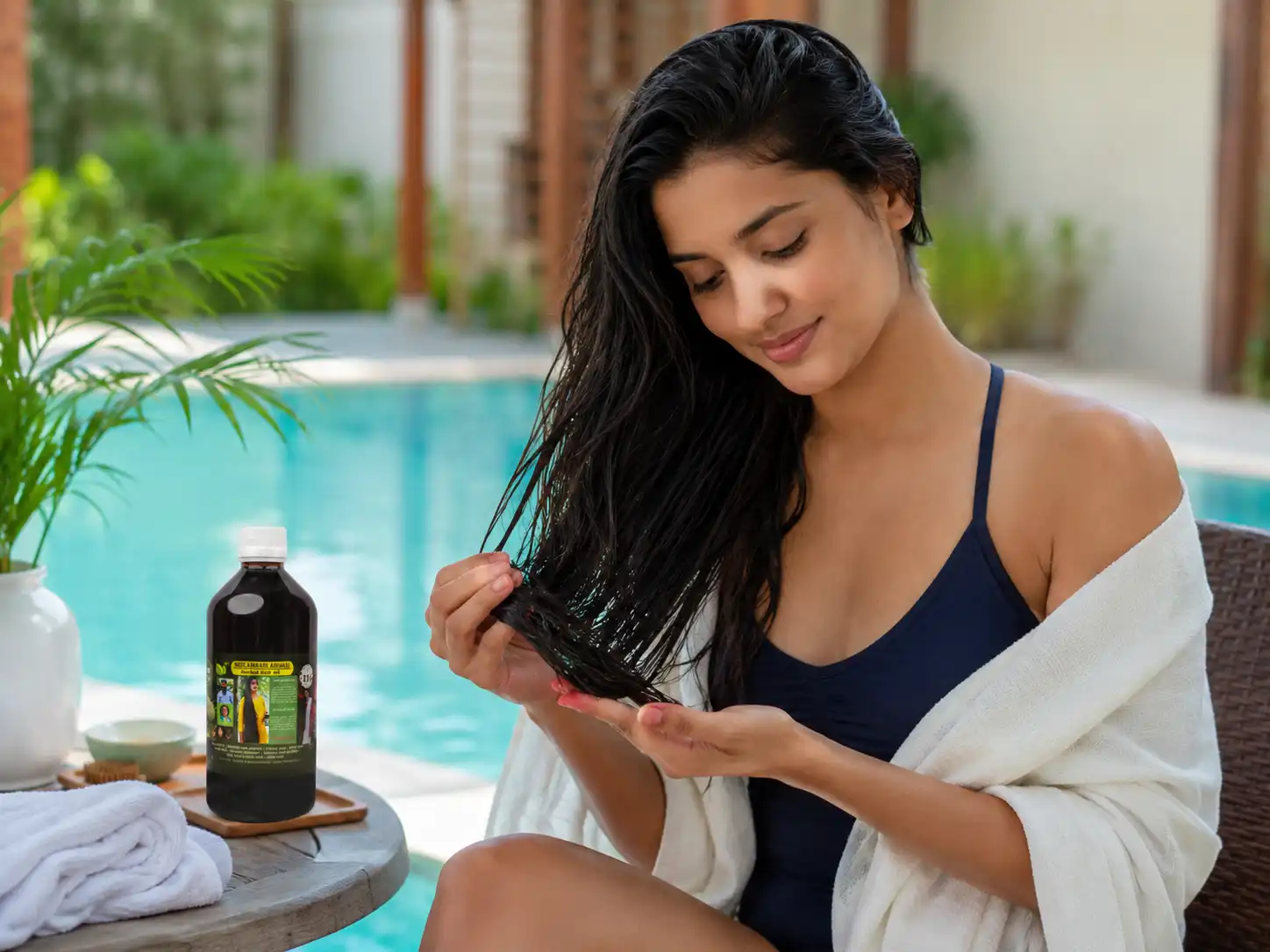
Swimming may be great for the body and mood, but sometimes it is less gentle on the hair, especially with Frequent exposure to chlorine Or with hair that originally tends to dry out or brittle.
That is why the question is repeated: Does tribal hair oil benefit hair after swimming and chlorine?And the short answer is: Yes, tribal hair oil may help support hair after swimming when used in a balanced way and within a proper routine. But it does not work alone if the hair is constantly exposed to dryness and neglect after swimming.
Therefore, the best result comes when the oil is part of A gentler care routine It focuses on calming the ends, reducing the sensation of dryness, and supporting softness after the pool.
Why hair is affected after swimming?
After swimming, many people may feel that their hair has become:
Drier and drier
Less softness
More entangled
Fast frizz
Tired ends
Harder to style
The reason is that hair after exposure to water and chlorine may need Steps balance texture and comfort. And here the importance of Smart Care appears, not just washing the hair and then leaving it to face dryness alone.
Is tribal hair oil suitable for hair after chlorination?
In many cases, yes.
Especially if the goal is:
Calm the ends
Softness support
Reduce the appearance of dryness
Relief of fragility
Making hair easier to style
Support a recovery routine after swimming
But the important thing here is to understand that oil is not a substitute for general hair care after the pool, it is A supportive step They help to make hair more comfortable.
How tribal hair oil can help hair after swimming?
When used in the proper way, it may help in several important aspects:
1. Reduce the sensation of dryness
Hair after swimming may look drier than usual, and oil may help to make the texture softer and calmer.
2. Calm the ends
The ends are usually the most affected part, especially if the hair is long, dry or dyed.
3. Reduce the appearance of brittleness
Some hair becomes more frizzy after chlorination or after frequent washing, and oil may help to smooth out this form.
4. Facilitate styling
The softer and less tangled the hair, the easier it will be to comb it and the less tousled it will be.
Does tribal Hair Oil Protect Hair from chlorine?
Here it is better if the answer is realistic.
Oil may help to support and care for hair after swimming, but it should not be understood as the only solution to all the effects of chlorine. The best care also depends on:
Not to leave hair careless after swimming
Washing hair in an appropriate way
Attention to the ends
Reduce habits that increase dryness and tightness
So, oil is useful, but it's often Part of the protection and recovery routine, No independent magic move.
Is it suitable for all hair types after swimming?
It may suit many types, but the way to use it varies depending on the nature of the hair.
Dry hair;
This is one of the types that may benefit the most from oil after swimming, because dehydration often appears on it quickly.
Oily hair
It can also suit him, but in a lighter amount, often only on the tips or before washing instead of the roots.
Light hair
He needs a very small touch-up, because light hair after swimming may look quickly overloaded if the amount is large.
Curly or thick hair
Often it can clearly benefit, because this type of hair is more affected by dryness and tangles after swimming.
Dyed hair
This species needs gentler care, and the oil may be a good step to soothe the ends and improve the texture after the pool.
What is the best time to use tribal hair oil after swimming?
If your goal is to support the hair after chlorination, then often these times are the most suitable:
Before washing after swimming
And this is one of the most convenient and practical ways.
The right amount can be applied to the hair or ends before washing, especially if the hair looks dry or tired.
After washing with a very light amount
Some people prefer a very small touch on the ends after cleaning the hair, especially if the goal is to calm the frizz and improve the overall shape.
Include a weekly routine if swimming is frequent
If you swim frequently, it's best to make the oil part of a clear routine, not a random step every time.
Should I apply oil on the scalp or on the ends?
In most cases, they are ends and hair length Pay attention after swimming, as they are more prone to dryness and roughness.
As for the scalp, it does not always need oil after swimming, unless you have a certain routine that suits it and the scalp accepts it with comfort.Therefore, often the most comfortable use is:
On the periphery
Or from the middle of the hair to the ends
Or on the drier and more tangled areas
Is it suitable to use it immediately after the pool?
It may work for some people, but it's often better if it's Having clearly arranged the routine, That is:
Clean or rinse hair
Dry it gently
Then use a light amount if the ends need it
As for placing a large amount directly at random, it may not be convenient and not give the best result.
What common mistakes after swimming make hair get tired more?
There are mistakes that make any oil less effective, such as:
1. Ignoring hair after the pool
Leaving hair tired or tangled without any care increases dryness and brittleness.
2. The use of a large amount of oil
Especially after washing, because the hair here needs only a light touch.
3. Violent combing
Hair after swimming may be more prone to tangling, and therefore need more gentleness.
4. Ignoring the ends
The ends are the most in need of care after chlorination.
5. Dependence on oil alone
If the whole routine is not suitable, then oil alone will not be enough.
Is it suitable to use before swimming?
Some people prefer a light step before swimming as part of their general routine, but the basic idea here is that the hair does not need a large amount or a burdened look. The best is always to have a routine Practical and quiet, The most noticeable benefit for many people comes from the care After swimming More than relying on oil alone before her.
How to build a simple hair routine after swimming using tribal hair oil?
The practical routine can be as follows:
Rinse or wash hair in a proper way after swimming
Gently dry hair without strong rubbing
Use tribal hair oil on the ends or on the hair before washing if dryness is evident
Comb the hair softly
Reduce heat after the pool
Repeat the routine in a balanced way if swimming is regular
And here some people prefer herbal options that give hair calmer care after exposure to stressful factors, such as Adivasi Herbal, Especially when a work routine is desired that supports softness and reduces dryness and brittleness without exaggeration.
How to know that the oil is suitable for your hair after swimming?
You can notice this by some signs:
Have the ends become softer?
Has the dryness eased?
Do you say entanglement?
Has styling become easier?
Have you been scared?
Did the hair remain comfortable and not burdened?
If these indicators are positive, then most likely the oil is suitable for you with this method of use.
When oil alone is not enough?
If the hair after swimming suffers from:
Very severe dryness
Clear and frequent split ends
A very annoying tangle
Strong damage from heat or dye, too
General weakness of the hair
Obvious scalp problem
Here, oil alone may not be enough, but the hair needs A gentler, clearer recovery routine.
Common mistakes
1. The belief that oil alone is enough to cure all traces of chlorine
Oil helps, but it's part of a whole routine, not the whole solution alone.
2. Use a large amount after swimming
Hair usually needs a light tempering, not to overload.
3. Ignoring the ends
The ends are the part that most needs to be taken care of after the pool.
4. Combing wildly
Hair after swimming is more prone to tangling, so it needs gentle.
5. Persisting in extreme heat
If chlorine combined with constant heat, the stress of the hair increased, no matter how good the oil was.
Conclusion
Tribal hair oil may benefit hair after swimming and chlorination When used in a balanced way that focuses on the ends, dryness and brittleness, not too much or indiscriminately.
It may help to support softness, reduce the appearance of dryness, make styling easier, and soothe hair after the pool.
But the best result comes when the oil is Part of a nicer, smarter routine Respects the condition of the hair after swimming.
Frequently asked questions (FAQ)
Is tribal hair oil suitable for hair after swimming?
Yes, it can be very convenient if the goal is to soothe dryness, support softness and reduce brittleness.
Does it help reduce hair dryness after chlorination?
It may help to make the hair more comfortable, softer and reduce the sensation of dryness, especially at the ends.
Should I put it on the scalp or the ends?
The ends and length of the hair are often the first to be taken care of after swimming, not the roots.
Is it used before washing or after washing?
It is possible in both ways, but before washing it is often more suitable if the hair is very dry, and after washing it suits very light use on the ends.
Is it suitable for dyed hair after swimming?
Yes, and it may be useful to him, because dyed hair is often more sensitive to dryness.
Is oil alone enough after the pool?
Not always, because the hair also needs proper cleaning, gentle combing, heat reduction and a calm routine after swimming.
Conclusion
Swimming does not have to mean that the hair will pay the price every time, but this needs Calmer, more conscious care. When it is used Tribal hair oil In the right way, it may be a beautiful step that helps to make the hair after swimming softer, calmer and easier to style.
And in the end, the best result comes not only from one step, but from A smart routine keeps hair comfortable even on pool days.