
Introduction
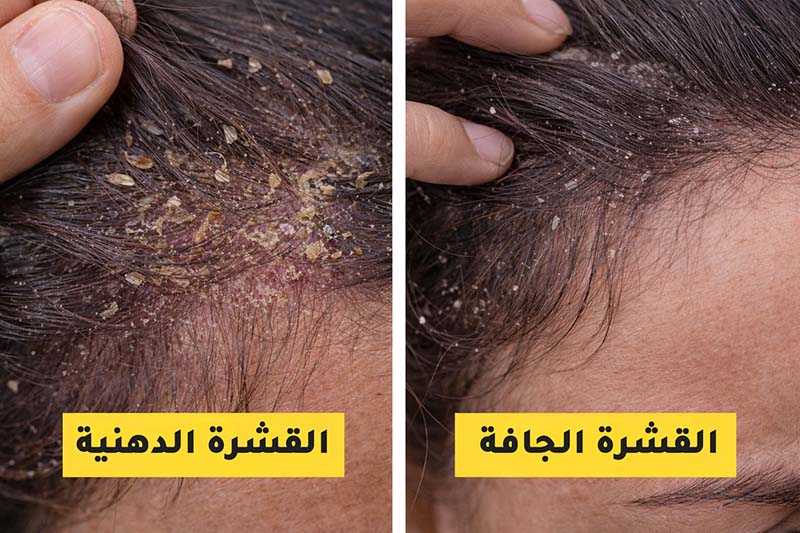
A lot of people say “I have dandruff” " but dandruff is not one type. In fact there are two very common types:
- Fatty crust (Adhesive peel + fat)
- Dry crust (Scattered small crusts + dryness)
The difference is important because treating one type with treatment of the other type may increase the problem.
In this article we give you an easy way to differentiate them, and then a clear treatment routine for each type.
First: how to tell them apart quickly?
Look at The size of the crusts + the sensation of the undercoat:
Oily dandruff
- Husks Large or medium And often Adhesive
- The scalp Fatty Or oiled up quickly
- Itching may be moderate to strong
- Crusts may increase a day after washing
Dry dandruff
- Husks Small and light Like a " powder”
- The scalp Tight and dry
- Itching is often milder and increases after bathing
- They increase in winter or with hot water
If you have severe redness, very thick scales, or pain, it may be another condition (eczema/psoriasis) that needs medical evaluation.
Why does fatty dandruff occur?
Common causes:
- Increased fat secretion
- Accumulation of styling products
- Insufficient washing of the scalp
- Stress and lack of sleep
- Not rinsing the shampoo thoroughly
Why does dry dandruff occur?
Common causes:
- Hot water
- Strong shampoo or excess washing
- Cool atmosphere/dry air
- Lack of hydration of the scalp
- Products with strong fragrances that cause irritation
The best remedy for oily dandruff (14-day plan)
Objective: to clean and regulate fat without strong drying
- Washing 3-4 times a week With a gentle shampoo
- Dandruff shampoo1-2 times a week
- Leave it on for 2-3 minutes, then rinse
- Avoid gels/waxes on the scalp
- Too long rinse
Oil with oily crust (with caution)
- Only once a week
- Duration: 45-90 minutes
- Then a good wash
The best remedy for dry dandruff (14-day plan)
Objective: soothe, moisturize and reduce drying
- Lukewarm water (warm is forbidden)
- Very gentle shampoo
- Washing 2-3 times a week (without exaggeration)
- Gentle drying without rubbing
Oil with dry crust
- 1-2 times a week
- Duration: 1.5-2.5 hours (or 2-3 hours if dehydration is severe)
- Then a gentle wash
A strong dandruff shampoo daily may increase dry dandruff because it dries the scalp more.
A ready-made weekly routine (abbreviated)
If the crust is greasy
- Day 1: dandruff shampoo
- Day 3: gentle shampoo
- Day 5: oil (45-90 minutes) and then a gentle shampoo
- Rest of the days as needed
If the crust is dry
- Day 1: gentle shampoo
- Day 4: Oil (1.5-2.5 hours) and then a gentle shampoo
- Mask / moisturizer for the ends if the hair is dry
- Rest of the days as needed
Common mistakes that increase dandruff (both types)
- Hot water
- Scratching with nails
- Lack of good rinsing
- Leave the oil overnight with a greasy scalp
- Strong shampoo daily
When did a doctor retreat?
- Too thick crusts or obvious spots
- Painful redness or oozing
- No improvement in 4 weeks
- Severe flaking with inflammation
Frequently asked questions (FAQ)
Is it possible that I have a greasy crust and dry ends?
Yes, and this is common. Solution: shampoo only for the scalp + moisturizing for the tips.
Is dandruff contagious?
No, most often it is not contagious.
When Will I see a result?
Improvement within 7-14 days, a stronger result within 30 days with adherence.
Conclusion
The biggest secret to treating dandruff is to know what type it is: oily or dry. Choose the right routine and you will notice a quick improvement in itching and flaking, and with persistence the problem disappears for long periods.
Order Adivasi Herbal oil now:www.adivasi-herbal.com