Oily vs. Dry Dandruff: How to Tell the Difference? And the Best Treatment for Each Type
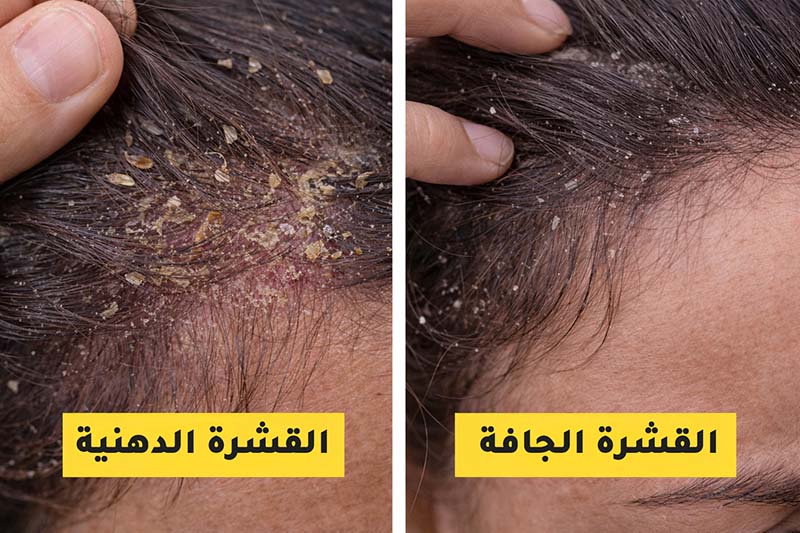
introduction
Many people say, "I have dandruff," but dandruff isn't just one type. In fact, there are two very common types:
- Oily dandruff (sticky flakes + fats)
- Dry rind (small scattered flakes + dryness)
The difference is important because treating one type of problem with the other may worsen the problem.
In this article we give you an easy way to differentiate between them, and then a clear treatment routine for each type.
First: How can you tell the difference between them quickly?
Look at the size of the scales + the scalp's feel :
oily dandruff
- Large or medium-sized scales, often sticky
- The scalp is oily or gets oily quickly.
- Itching may be moderate to severe
- The scales may increase a day after washing.
dry husk
- Small, light flakes like “powder”.
- The scalp is tight and dry.
- The itching is usually milder and increases after showering.
- It increases in winter or with hot water
If you have severe redness, very thick scales, or pain, it may be another condition (eczema/psoriasis) and you need a medical evaluation.
Why does oily dandruff occur?
Common causes:
Comments
